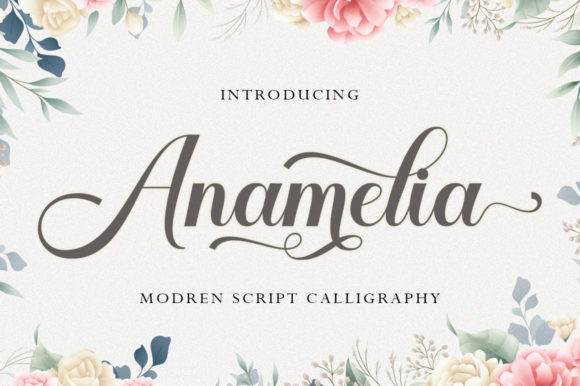
Anamelia: A Timeless Calligraphy Font for Modern Design Needs
Anamelia is a calligraphy font that brings the charm of ancient manuscripts into contemporary design. With its classic style and elegant touch, it captures the essence of handwritten lettering while maintaining the clarity and consistency needed for modern applications. This font is not just a stylistic choice; it's a versatile tool that can elevate the visual appeal of various projects.
Designed with harmony in mind, Anamelia works well with its script counterpart, Anamelia Script, allowing designers to create cohesive and visually striking compositions. Whether you're working on wedding materials, book covers, or branding elements, this font offers a unique way to convey sophistication and timeless beauty.
Real-World Applications of Anamelia
The versatility of Anamelia makes it suitable for a wide range of real-world situations. For instance, when designing wedding invitations or save-the-date cards, the font’s elegance can help set a romantic and luxurious tone. Its ability to mimic the flow of handwritten notes adds a personal touch that printed text often lacks.
In the publishing industry, Anamelia is an excellent choice for book covers, especially for genres like historical fiction or poetry where a classic aesthetic enhances the reader's experience. The font’s readability ensures that titles remain legible even when stylized.
For businesses looking to establish a formal or upscale brand identity, Anamelia can be used in logos, business cards, and certificates. Its clean lines and refined curves give off a sense of professionalism that aligns well with industries such as law, finance, and luxury goods.
Who Can Benefit from Using Anamelia?
Creative professionals, including graphic designers, typographers, and illustrators, will find Anamelia particularly useful. It provides them with a reliable resource to incorporate handcrafted aesthetics into digital projects without compromising on quality or legibility.
Event planners and wedding coordinators can leverage Anamelia to create bespoke stationery and promotional materials that stand out. The font’s unique character helps differentiate their offerings in a competitive market.
Academic institutions and publishers may also benefit from using Anamelia for thesis covers, academic journals, or special edition publications. Its classic appearance complements scholarly content while adding a touch of visual interest.
Considerations Before Using Anamelia
While Anamelia offers many advantages, there are some factors to consider before incorporating it into your design work. First, ensure that the font is appropriate for the context. While it excels in formal and luxurious settings, it may not be the best fit for casual or minimalist designs.
Another consideration is legibility. Although Anamelia is designed to be readable, its script counterpart may require additional spacing or kerning adjustments to maintain clarity, especially in longer texts. Testing the font in different sizes and layouts can help identify potential issues early on.
Additionally, licensing and usage rights should be reviewed carefully. Depending on the project scope, you may need to purchase commercial licenses or ensure that the font is available under a permissive open-source license.
Practical Examples and Observations
One practical example of Anamelia in action is its use in a boutique wedding planner’s branding. By incorporating the font into logos, website headers, and social media posts, the planner was able to create a cohesive and elegant visual identity that resonated with clients seeking a traditional yet modern wedding experience.
Another observation comes from a small publishing house that used Anamelia for a collection of poetry books. The font’s flowing lines and graceful curves complemented the lyrical nature of the content, enhancing the overall reading experience and making the books more appealing to potential buyers.
In a corporate setting, a law firm utilized Anamelia for their annual reports and legal documents. The font helped reinforce the firm’s image as professional and trustworthy, while still maintaining a level of sophistication that aligned with their brand values.
Strengths and Limitations of Anamelia
The primary strength of Anamelia lies in its ability to blend tradition with modernity. It offers a classic look without feeling outdated, making it a valuable asset for designers who want to create visually rich content that appeals to a broad audience.
However, one limitation is that it may not be suitable for all types of text. Long paragraphs or complex technical documents might suffer from reduced readability if the font is used extensively. In such cases, pairing Anamelia with a more straightforward sans-serif font could provide a balanced approach.
Furthermore, while Anamelia Script adds a decorative element, it requires careful handling to avoid overwhelming the design. Ensuring proper contrast and hierarchy is essential when using both variants together.
Despite these limitations, Anamelia remains a powerful tool for designers looking to infuse their work with a sense of history and elegance. Its adaptability across various industries and purposes makes it a go-to choice for those who appreciate the artistry of calligraphy in the digital age.